2 hr
Vigo History & Culture Walking Experience
Discover Vigo's hidden treasures and maritime legends on this immersive 2-hour neighborhood exploration
Reserve
Hand-picked by our editors — only the best 5 experiences from 23 reviewed.
Verified partners for every tour, free cancellation where available, and instant confirmation on every booking.
2 hr
Discover Vigo's hidden treasures and maritime legends on this immersive 2-hour neighborhood exploration
Reserve
1 hr 30 min
Journey through Galicia's largest port city, from fishing quarters to panoramic fortress heights
Reserve
1 hr 30 min
Discover Galicia's darkest folklore on a spine-tingling 90-minute stroll through Vigo's historic center
ReservePrices from verified partners. Availability updates in real time at checkout. Free cancellation policies apply where shown.
The landmarks, rooms, and views travelers on this tour remember — all visible on a single visit.
The famous sculpture by Leiro Francisco representing the union of the city with the sea. It stands as the primary meeting point for all tours at 0-meters altitude.
The public model offers social spontaneity for exploring urban heritage, while the private excursion provides a tailored encounter with regional gastronomy; both enrich the visitor experience through local insight. Exploring the city landmarks via a free walking tour vigo english helps travelers balance budget and engagement.
| Feature | Top pick Free Walking Tour | Private Walking Tour |
|---|---|---|
Structure |
Group-based itinerary | |
Group Size |
Large/Open | |
Price Model |
Tip-based (0 EUR entry) | |
Interaction Level |
Broad social engagement | |
Customization |
None (Standard route) | |
Food Inclusions |
None (Self-funded) | |
| See tickets → |
Verdict: Choose the public free walking tour vigo english tour for a communal atmosphere, or opt for the private experience to enjoy personalized service and local food tastings with your free walking tour vigo english tickets.
Choose your ticket, select your date, and reserve in under two minutes. Secure checkout handled by our verified partner.
Instant confirmation by email, with a mobile voucher you can save offline. No printing, no queuing at a collection desk.
Arrive at the entrance, show your voucher on your phone, and walk in. Most tickets include priority or skip-the-line access.
Practical details for your visit straight from our verified partners — hours, access, rules, and how to get there.
Praza Porta do Sol, 36202 Vigo
Look for the guide's specific umbrella color
Many local buses stop near Porta do Sol; central hub for most lines.
Comfortable walking shoes are highly recommended as the route covers cobblestone streets and inclines. Dress according to the weather, as the coastal climate in Vigo can change quickly.
Travel light, as you will be walking for 2 hours through the city center. There is no central storage provided during the free walking tour vigo english.
Photography is encouraged throughout the free walking tour vigo english. Capture the panoramic estuary views and historic architecture freely.
The tour is generally accessible for those with reduced mobility, though some parts of the old town feature steep streets. An accompanying person is advised for wheelchair users.
The experience is family-friendly and suitable for children. The pace allows for a relaxed exploration of the city's landmarks.
Guides often provide recommendations for authentic local cuisine and tapas bars during the free walking tour vigo english. Snacks and water are not provided as part of the tour.
Praza Porta do Sol, 36202 Vigo
Look for the guide's specific umbrella color
Get directionsBest time to go, insider tips, nearby landmarks, and the cancellation fine print — flip through to skim what matters to you.
How crowds, weather, and events shift across the year.
Ideal weather for outdoor walking and estuary views; peak visitor season.
Small details that turn a good visit into a great one.
Confirm your reservation at least 12 hours in advance to ensure the free walking tour vigo english runs.
Non-bookable sights within a short walk — free to visit, easy to pair.
The historic heart of the city featuring narrow streets and local shops.
Flexible, no hidden fees.
Free cancellation is available for most bookings if done in advance. Please refer to your specific booking confirmation for the operator's exact window.
Hand-picked options within walking distance — pick a district for vibe, or a specific hotel for convenience.
Central area with boutique guesthouses and historic character.
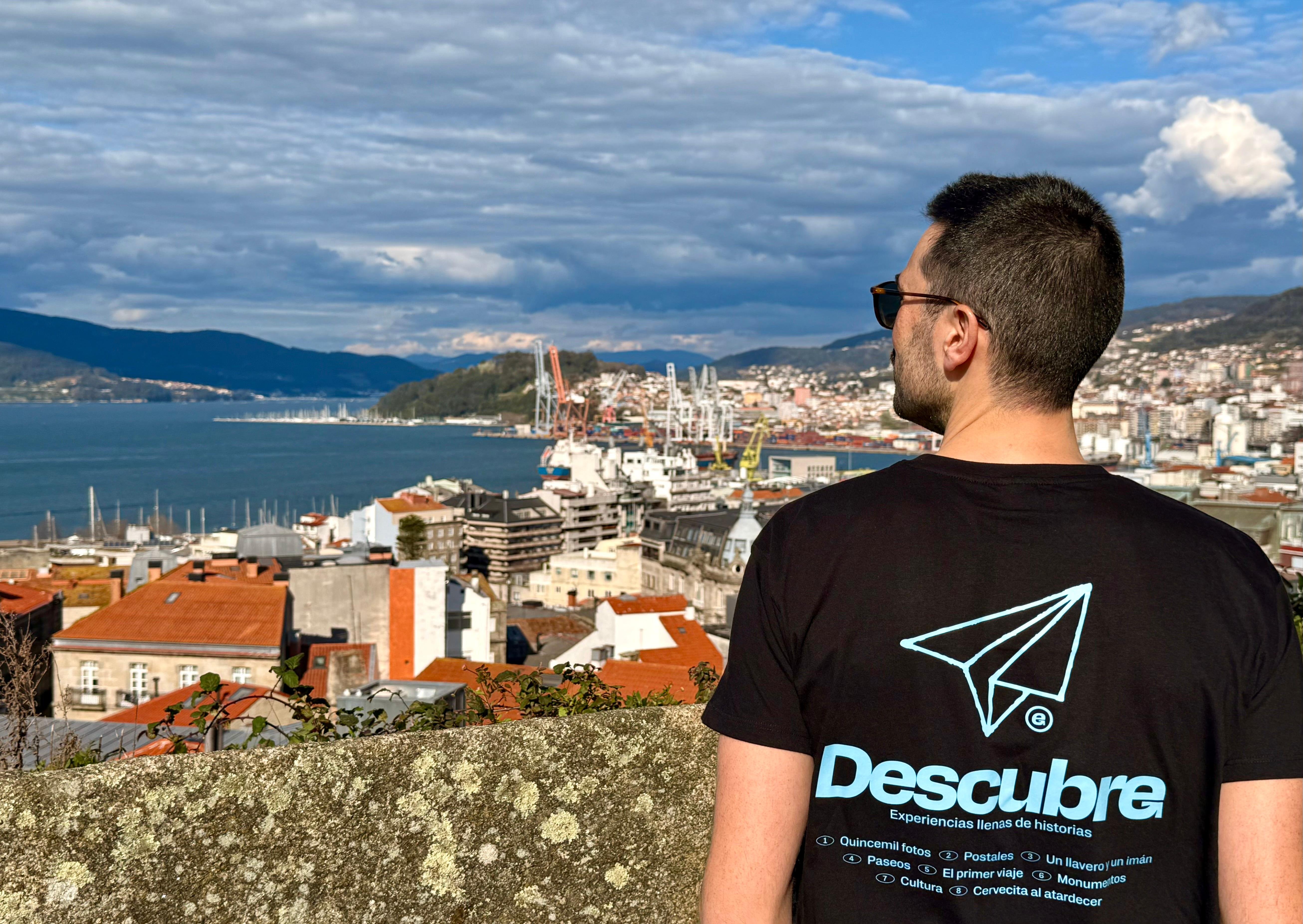
Vigo's Casco Vello—Old Quarter—sits on a granite slope that has watched Atlantic fishing fleets depart for five centuries. The district's narrow stone lanes, built without vehicles in mind, climb from the commercial port at Porta do Sol to the Castro fortress, a 17th-century watchtower that once scanned for Barbary corsairs and English privateers. Today the fortress offers a 360-degree panorama: the Cíes Islands float on the Ría de Vigo estuary to the west, while the modernist Fishermen's Neighborhood stretches along the eastern waterfront. Vigo became Galicia's largest city not through conquest or royal decree but through oyster cultivation, sardine canning, and transatlantic emigration routes that connected the port to Buenos Aires and Havana. English-speaking walking tours operate daily from Praza Porta do Sol, the central square where fishmongers once auctioned their morning catch. Guides interpret the modernist facades along Rúa Príncipe—designed in the 1920s when Vigo's shipyards were outfitting steamers—and the Baroque Co-Cathedral of Santa María, whose altarpiece survived a 1719 English naval assault. The district's toponymy reveals maritime memory: Rúa Pescadería (Fishmongers' Street), Praza da Pedra (Stone Square, where granite ballast was offloaded), and Rúa Real (Royal Street, the customs route). Free walking tour Vigo English options typically cover two kilometers over two hours, ascending to Castro for estuary views and descending through Plaza de la Constitución, where wrought-iron balconies frame century-old cafés. The tip-based model—common across Iberia—allows participants to determine value after the experience. Guides, often history graduates or licensed interpreters, provide context that static plaques cannot: the role of Vigo's merchant guilds in resisting Napoleonic occupation, the postwar fishing boom that tripled the population between 1950 and 1980, and the contemporary tension between heritage preservation and port expansion. The walks avoid vehicle traffic by threading lanes too narrow for cars, pausing at miradouros—viewpoints—where Atlantic light shifts hourly across the ría. Praza da Estrela, a pocket square named for a 16th-century inn, serves as a common midpoint; here, guides explain how Vigo's neutrality during World War I made it a coaling station for both Allied and Central Powers vessels. Vigo's English walking tours also interpret the city's relationship with the sea through architecture: shipowners' stone mansions on Rúa Teofilo Llorente, their balconies cantilevered to maximize harbor views; the wrought-iron Mercado da Pedra, a 1920s market hall where Atlantic catches are still sold at dawn; and the waterfront promenade, recently redesigned to reclaim space from industrial docks. The Castro fortress, accessed via stone steps or a public elevator, anchors most routes—not for its military history alone, but for the way its vantage point renders Vigo's geography legible: a natural deepwater harbor, protected by barrier islands, open to westerlies that carried explorers toward the Americas.

"The district's toponymy reveals maritime memory: Fishmongers' Street, Stone Square where granite ballast was offloaded, and Royal Street, the customs route."
A step-by-step walkthrough of the visit — what you'll see, how long each stage takes, and the details that matter.
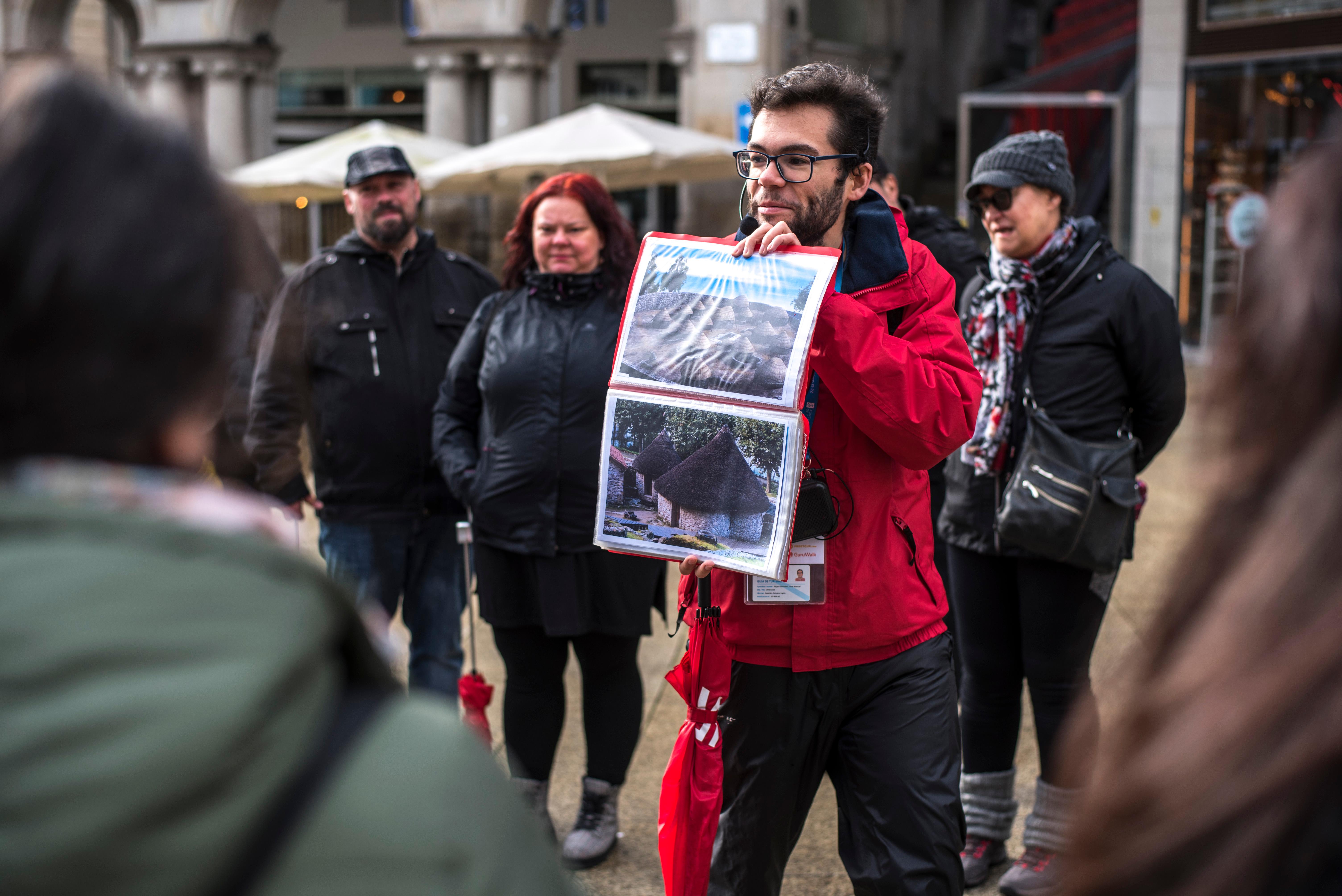
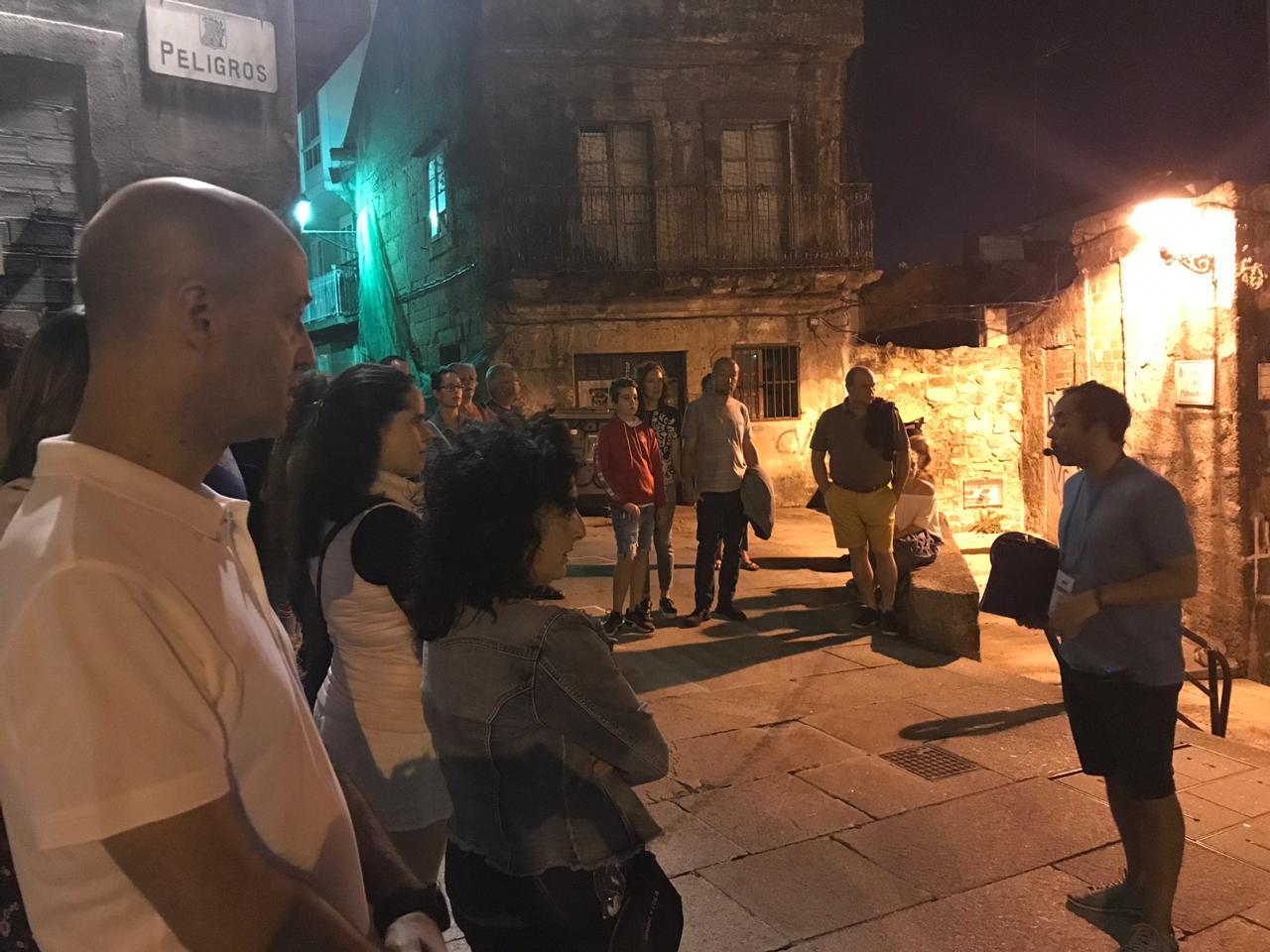
You meet your guide at Praza Porta do Sol, where the square's name—Gate of the Sun—recalls the medieval wall that once enclosed Vigo's fishing quarter. The group, typically eight to fifteen participants, begins at the Co-Cathedral of Santa María. Your guide points to cannonball scars on the facade, remnants of the 1719 English siege, then leads you uphill through Rúa Pescadería. The lane narrows to two meters; granite townhouses press close, their ground floors converted to wine bars and tapa counters. You pause at Miradouro da Laxe, a pocket viewpoint where the Cíes Islands emerge across the ría. Your guide explains the archipelago's status as a national park and its Roman name—Islands of the Gods. The route continues to Castro fortress, either via stone steps worn smooth by centuries of foot traffic or the public elevator. At the summit, you circle the fortress walls. Vigo's port spreads below: container cranes, fishing docks, the naval station. Your guide identifies landmarks—Monte do Castro's forested slopes, the Rande Bridge spanning the estuary. Descending, you enter Praza da Constitución. Wrought-iron balconies overhang the square; your guide notes the Art Nouveau details and recounts the plaza's role during the 1809 French occupation. The walk concludes at Porta do Sol, where you tip according to your assessment of the experience. The entire loop—two hours, two kilometers—leaves you oriented to Vigo's geography and ready to explore the Fishermen's Neighborhood or the oyster farms along the southern shore.
The tour operates daily, with sessions available from 00:00–23:59 based on booking availability.
The route is generally accessible, though an accompanying person is required for those with reduced mobility.
You can secure your spot by booking online through official platforms, though some offer walk-up availability.
Yes, this attraction is family-friendly and welcomes children of all ages.
There is a 0 EUR entrance fee, though the tour operates on a tip-based system for the guide.
All tours meet at the Praza Porta do Sol, specifically near the El Sireno sculpture.
Wear comfortable shoes and weather-appropriate clothing as you will be walking for approximately 2 hours.
Yes, photography is allowed and encouraged at all historic and scenic stops.
Tours typically continue in light rain, but it is recommended to bring a rain jacket due to Vigo's maritime climate.